
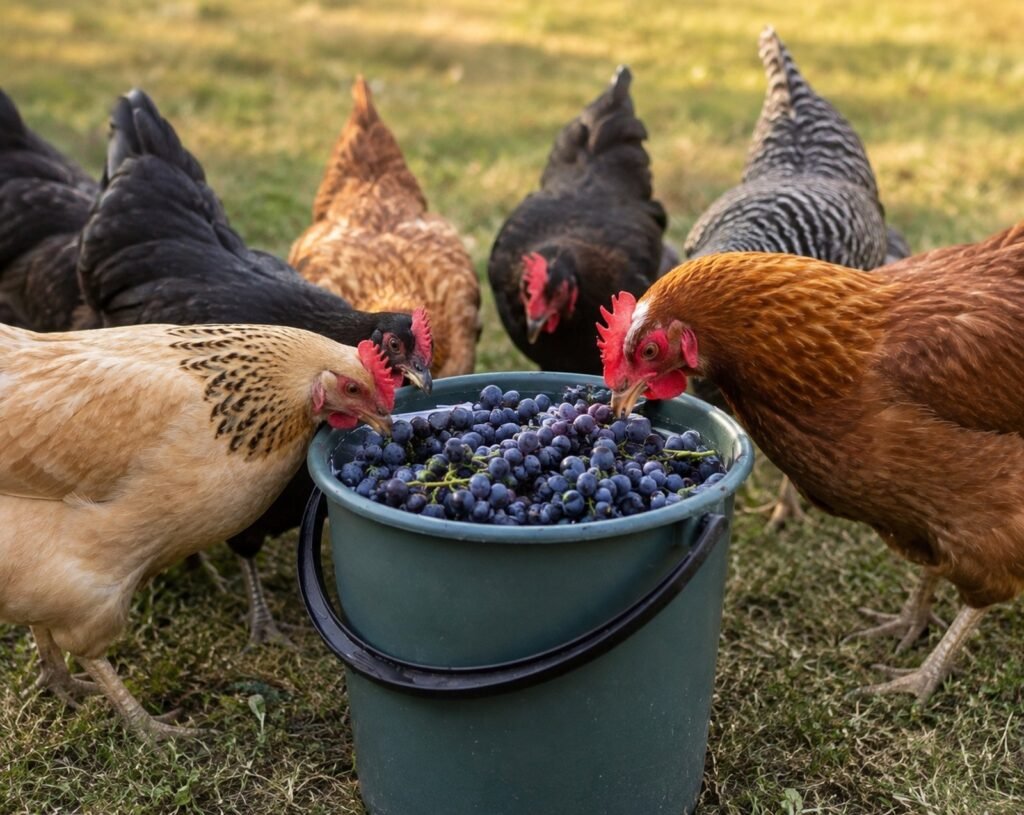
Yes, can chickens eat grapes? Absolutely. Chickens can safely enjoy both red and green grapes as an occasional treat. They contain vitamins, antioxidants, and water that can support your flock’s overall health.
However, grapes should never replace a balanced poultry feed. Chickens need complete feed for their daily nutrition, while grapes should only make up a small portion of their diet.
Are Grapes Safe for Chickens to Eat?
Yes, grapes are generally safe when they are:
-
- Fresh and clean
-
- Free from mold
-
- Fed in moderation
-
- Cut into smaller pieces for smaller birds
Avoid feeding spoiled or fermented grapes because they may upset your chickens’ digestive system.
Expert Tip: Many poultry keepers rinse grapes thoroughly before feeding to remove dirt and possible pesticide residue. Washing fruit is a simple habit that helps keep your flock healthy.
Do Chickens Like Grapes?
Most chickens love grapes.
Their natural sweetness makes them one of the most popular treats for backyard chickens. Many owners even use grapes during training or when encouraging chickens to return to the coop.
Every flock has different preferences, though. Some birds may prefer berries, watermelon, or mealworms over grapes.
Should Chickens Eat Grapes?
Yes—but only as a treat.
Think of grapes as dessert rather than a main meal.
A healthy chicken diet should consist mainly of:
-
- Complete chicken feed
-
- Fresh water
-
- Occasional healthy treats
-
- Access to grit if they eat scratch grains or treats
Treats, including grapes, should stay below about 10% of the overall diet.
Are Grapes Good or Bad for Chickens?
The answer depends on how much you feed.
Small amounts provide valuable nutrients, while excessive amounts can create health issues.
Health Benefits of Grapes for Chickens
Grapes offer several nutritional benefits.
Vitamins
They contain Vitamin C and Vitamin K, which support normal body functions.
Antioxidants
Dark-colored grapes contain antioxidants that help protect cells from damage.
Hydration
Since grapes contain a high amount of water, they make an excellent summer treat.
Natural Energy
Their natural sugars provide a quick energy boost, especially for active free-range chickens.
Mental Enrichment
Scattering a few grape pieces around the run encourages natural foraging behavior and reduces boredom.
Real Example:
Many backyard chicken owners freeze small grape pieces during hot weather. Chickens enjoy pecking at the cool fruit, which provides both hydration and enrichment.
Potential Risks of Feeding Grapes
Although grapes are healthy, feeding too many comes with risks.
Possible problems include:
-
- Weight gain
-
- Reduced appetite for balanced feed
-
- Loose droppings after overeating
-
- Too much sugar in the diet
The solution is simple: moderation.
Can Chickens Choke on Grapes?
Large grapes can become a choking hazard, especially for:
-
- Young chicks
-
- Small breeds
-
- Chickens that eat very quickly
To reduce the risk:
-
- Cut large grapes into halves or quarters.
-
- Remove damaged fruit.
-
- Supervise when introducing grapes for the first time.
How Many Grapes Can Chickens Eat?
Moderation is the key to healthy treats.
The exact number depends on your flock’s size, age, and overall diet.
Recommended Serving Size
A practical guideline is shown below.
Chicken Type |
Suggested Serving |
| Baby chicks | Avoid or offer only tiny pieces occasionally |
| Small breeds | 1–2 grapes |
| Average laying hens | 2–4 grapes |
| Large breeds | 3–5 grapes |
Remember, grapes are treats—not meals.
How Often Can You Feed Grapes?
Offering grapes one or two times per week is generally enough.
Rotate grapes with other healthy treats such as:
-
- Blueberries
-
- Strawberries
-
- Watermelon
-
- Apples (without seeds)
-
- Pumpkin
A varied diet provides more balanced nutrition than relying on one fruit.
Step-by-Step: How to Safely Feed Grapes to Chickens
Preparing grapes correctly makes feeding safer and easier.
Step 1: Wash the Grapes
Always rinse grapes under clean water to remove dirt and residues.
Step 2: Inspect the Fruit
Throw away grapes that are:
-
- Moldy
-
- Rotten
-
- Fermented
-
- Badly damaged
Step 3: Cut Large Grapes
Halve or quarter larger grapes before feeding.
Smaller pieces lower the choking risk and make sharing easier within the flock.
Step 4: Feed in Moderation
Scatter a few pieces around the run instead of placing everything in one pile. This encourages natural foraging behavior.
Should Grapes Be Cut in Half?
Yes, especially for:
-
- Young birds
-
- Bantam breeds
-
- Large grapes
Adult chickens can often manage whole seedless grapes, but cutting them is still the safest option.
Expert Tip: If introducing grapes for the first time, cut every grape into quarters. Observe how your flock eats before offering larger pieces in future feedings.
Fresh vs. Frozen Grapes
Both options can be suitable.
Fresh Grapes
Pros
-
- Easy to digest
-
- Soft texture
-
- Available year-round
Cons
-
- Spoil quickly
Frozen Grapes
Pros
-
- Excellent cooling treat during hot weather
-
- Last longer in storage
Cons
-
- Should thaw slightly before feeding to reduce hardness, especially for smaller chickens.
Whole Grapes vs. Crushed Grapes
Whole grapes work well for many adult chickens, but crushed or cut grapes offer several advantages:
-
- Easier to swallow
-
- Lower choking risk
-
- Better for chicks
-
- Easier for timid birds to eat
If you’re unsure, crushed grapes are always the safer choice.
Can Chickens Eat Different Parts of Grapes?
Many beginners ask whether every part of the grape is safe. The answer varies depending on which part you’re talking about.
Can Chickens Eat Grape Seeds?
Yes.
Most healthy adult chickens can digest grape seeds without problems because their gizzards grind food efficiently.
However, seedless grapes remain the easiest and safest choice, particularly if you have young birds.
Can Chickens Eat Grape Skins?
Yes.
Grape skins contain fiber and beneficial plant compounds.
Wash grapes before feeding to remove dirt or chemical residue that may remain on the skin.
Can Chickens Eat Grape Stems?
Small amounts of tender stems usually won’t harm adult chickens, but they provide little nutritional value.
Remove thick, woody stems because they can be difficult to eat and may present a choking hazard.
Can Chickens Eat Grape Leaves or Vines?
Young grape leaves are generally considered safe in small amounts if they haven’t been treated with pesticides.
However, woody vines are tough and difficult to digest, so they are best avoided.
Can Chickens Eat Raisins?
Yes, but only occasionally.
Raisins are simply dried grapes, meaning they contain much more concentrated sugar than fresh grapes.
Offer only a few raisins as a rare treat rather than feeding them regularly.
Frequently Asked Questions
Can Chickens Eat Moldy Grapes?
No. Moldy grapes should never be fed to chickens. Mold can upset their digestive system and may expose them to harmful toxins. If a grape looks spoiled, throw it away.
Can Chickens Eat Grapes Every Day?
It is better not to feed grapes every day. Chickens can eat grapes as an occasional treat, but daily feeding may lead to too much sugar in the diet and reduce their interest in balanced feed.
Are Green or Red Grapes Better for Chickens?
Both green and red grapes are safe for chickens. Red grapes may contain slightly more antioxidants, but either type works well as long as the grapes are fresh and fed in moderation.
Can Chickens Eat Seedless Grapes?
Yes. Seedless grapes are often the easiest option because they reduce the chance of choking and are simpler for chickens to eat, especially for smaller birds and chicks.
Can Wild Birds and Chickens Eat the Same Fruits?
Yes, many fruits are safe for both wild birds and chickens, including grapes, berries, and melon. Still, always avoid moldy, spoiled, or pesticide-treated fruit for either one.